
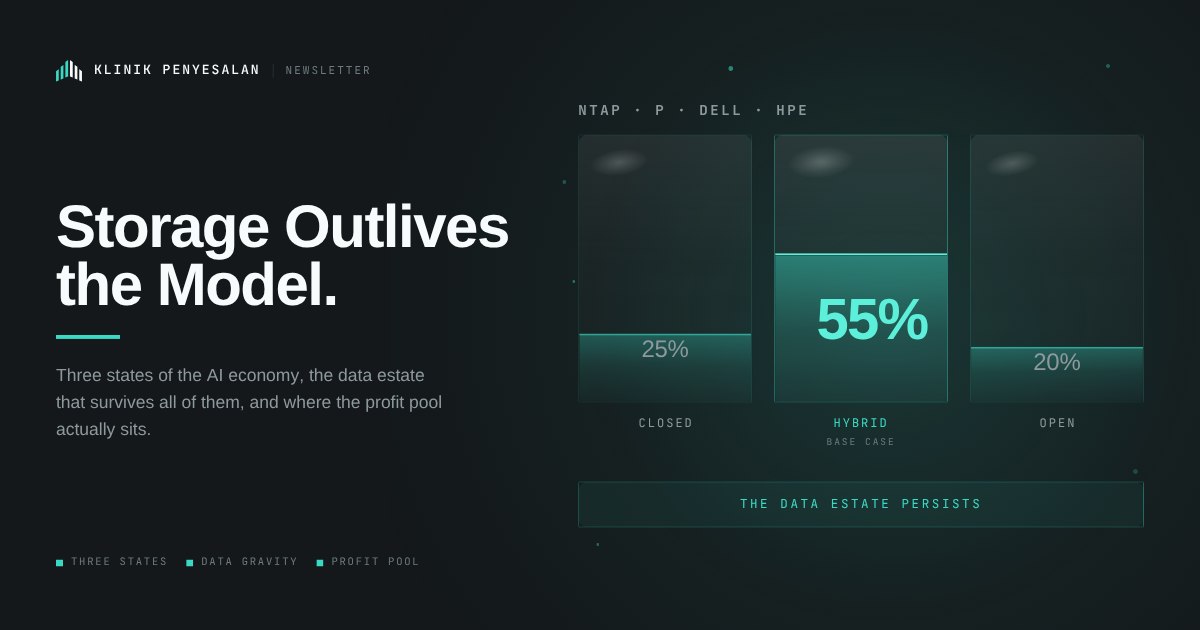
Open-weight models are significantly altering artificial intelligence token economics. By compressing inference costs, making localized data sovereignty and customization practical, and expanding the addressable set of enterprise tasks, these models are reshaping deployment dynamics. Nevertheless, open-weight architectures have not eliminated the frontier reliability gap required for complex, multi-step reasoning. Consequently, the most probable macro equilibrium is a hybrid topology wherein proprietary closed models retain premium, high-reasoning workloads, while open-weight and smaller domain-specific models service cost-sensitive, private, sovereign, edge, and high-volume tasks.
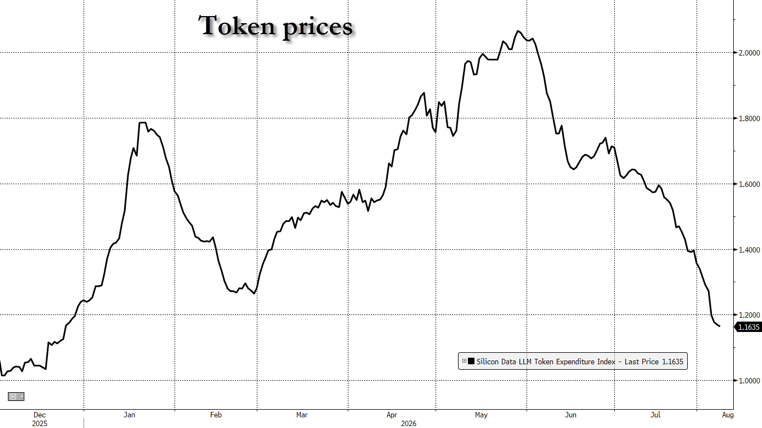
Figure 1 Token Expenditure Index, Source: SiliconData
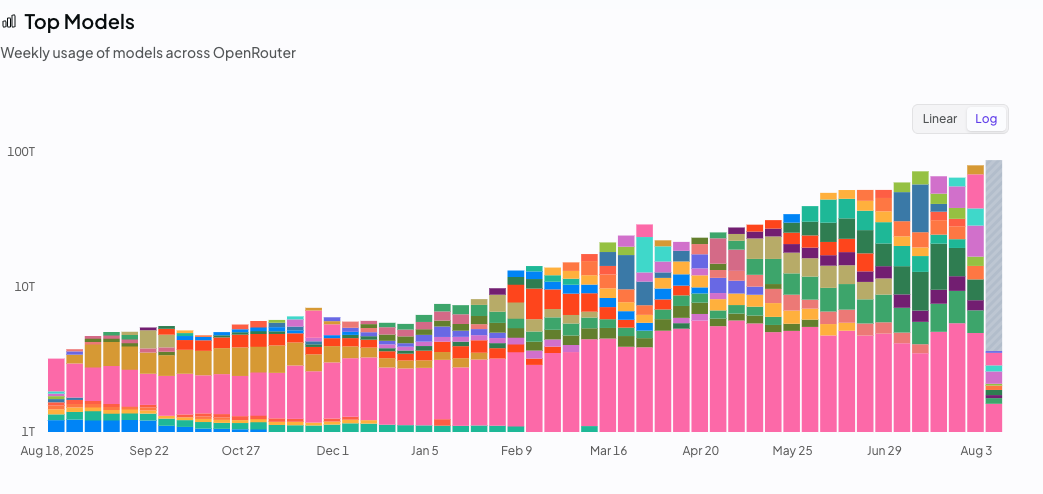
Figure 2 Weekly Token Usage, Source: OpenRouter
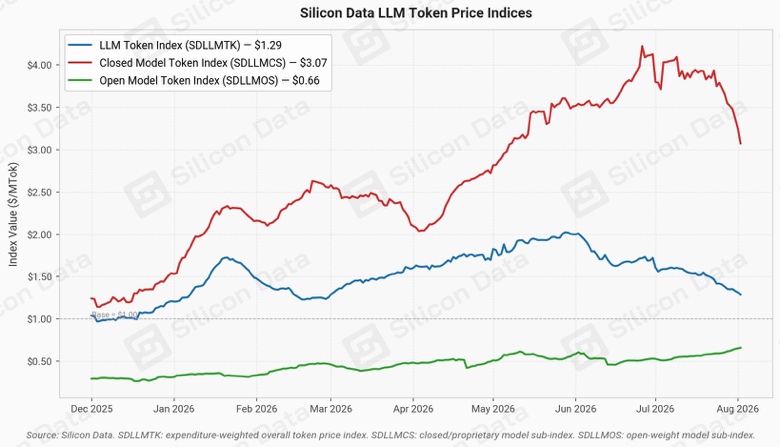
Figure 3 Silicon Data LLM Token Price Indices, Silicon Data
Empirical observations across recent quarters reveal a dual trend: while unit inference costs continue to decline rapidly and open-weight models narrow the reliability gap against proprietary frontier counterparts, aggregate token usage is expanding exponentially. As intelligence transitions toward commodity status, capital markets are re-evaluating value distribution across the technology stack. A recent Morgan Stanley research framework categorized this future ecosystem into three structural scenarios: [Appendix. 1]:
- Scenario 1: Closed models win (Proprietary oligopoly).
- Scenario 2: Hybrid coexistence (The enterprise consensus).
- Scenario 3: Open models win (Decentralized, local inference).
In the Morgan Stanley framework, traditional enterprise storage and on-premises infrastructure are classified as conditional beneficiaries that capture value primarily under Scenario 3. This classification fundamentally misinterprets enterprise IT physics by treating data infrastructure as a mere hardware proxy for localized server purchases. Model weights and compute allocations are transient, whereas enterprise data represents persistent state.
When unit token prices collapse by 90%, total enterprise expenditure on AI does not contract proportionally. Rather, lower execution costs unlock price elasticity, resulting in a volume explosion as organizations deploy autonomous agents, real-time telemetry analytics, and automated document processing pipelines. Each deployed agent requires persistent state memory, vector indexes, execution logs, and policy enforcement guardrails. Far from diminishing storage demand, commoditized inference unleashes a vast expansion of unstructured data that must be ingested, indexed, and secured.
The requirement for enterprise data infrastructure persists across all three structural scenarios:
Scenario 1 (Closed State): Enterprise workloads require secure, ultra-low-latency cloud storage volumes to stream private data into proprietary API endpoints without violating regulatory or compliance boundaries.
Scenario 2 (Hybrid State): Data mobility becomes the central operational bottleneck, requiring unified control planes to route, replicate, and govern records across on-premises databases, cloud vector stores, and edge deployments.
Scenario 3 (Open State): Enterprise operations shift heavily toward local model fine-tuning, Retrieval-Augmented Generation (RAG) architectures, and local vector indexing pipelines.
Consequently, the primary profit pool in enterprise storage does not reside in commoditized physical hard drives or raw capacity. Strategic value accrues to the software abstraction layer that manages data governance, zero-trust, and in-place vector indexing. If an autonomous AI agent retrieves an enterprise document to formulate a response, the underlying storage engine must verify in real time whether that specific requesting entity holds explicit authorization. When governance fails at the storage layer, even the most capable model becomes a critical enterprise liability.
The fundamental investment inquiry centers on where economic rent accrues as model execution costs approach zero. Decreasing per-call costs do not eliminate the enterprise data estate. Training checkpoints, fine-tuning datasets, vector indexes, embedding stores, model versioning records, audit trails, policy metadata, and cyber-resilience snapshots remain mandatory operational requirements regardless of which model generates the output token. Enterprise storage therefore represents one of the few infrastructure categories that maintains structural relevance across all three scenario outcomes, although the specific location, mechanism, and margin profile of the profit pool vary by scenario.
1. Three states and the rent regime
From Morgan Stanley Memo, “Open-Weight AI Models and the Three States of the AI Economy”.
The closed state assumes that frontier capability and reliability remain scarce. The hybrid state assumes that closed models retain premium work while open, smaller and domain-specific models take cost-sensitive, private, sovereign and high-volume workloads. The open state assumes that open weights close the reliability gap for most economically important tasks and that deployment, customization and local inference become the differentiated layers.
The probabilities below are scenario weights, not measured probabilities. They are useful for framing the investment question but should not be treated as a forecast of model adoption, storage revenue or industry profit.
|
State |
Probability |
What must be true |
Storage and investor implication |
|
Closed |
25% / 20% |
Frontier reliability and safety remain scarce. Managed services dominate premium work. |
Storage supports centralized training, checkpoints, retrieval and recovery. Hyperscalers and custom infrastructure capture more rent. Look for first-party cloud and partner attach, not generic capacity. |
|
Hybrid |
55% / 45% |
Closed models lead difficult tasks. Open and smaller models are good enough for cost-sensitive, private, sovereign and high-volume workloads. |
Data moves across public cloud, private cloud, on-premises systems and edge devices. Governance, identity, recovery, mobility and subscriptions become explicit budget lines. This is the strongest state for listed enterprise-storage vendors. |
|
Open |
20% / 35% |
Open weights close the reliability gap for most economically important tasks. Self-hosting and local inference become operationally attractive. |
Fine-tuning, retrieval-augmented generation, local inference and sovereignty increase retrieval and storage intensity. Generic capacity is more price sensitive. Favor flash efficiency, data services and recurring revenue. |
Sources: Adapted From Morgan Stanley Memo
Each state implies a different rent regime. In the closed state, rents accrue to frontier model margin, cloud distribution, accelerator utilization and premium enterprise contracts. In the hybrid state, value migrates toward data gravity, identity, observability, governance and efficient model orchestration. In the open state, models become a more available input and durable rents sit in private infrastructure, edge distribution, systems integration, security, proprietary data and workflows. The same physical asset, such as a flash array or vector index, can therefore be scarce in one state and a commodity capacity product in another.
2. Why storage demand persists
The Morgan Stanley beneficiary matrix places Dell, HPE, NetApp and Pure Storage (now Everpure), in the hybrid and open columns rather than the closed column. That placement is directionally reasonable because closed-state spending is concentrated in hyperscalers, accelerators, memory bandwidth and custom backend infrastructure. The matrix also identifies on-premises infrastructure as an open-state beneficiary, while noting that memory bandwidth and retrieval can be more direct bottlenecks than generic enterprise capacity.
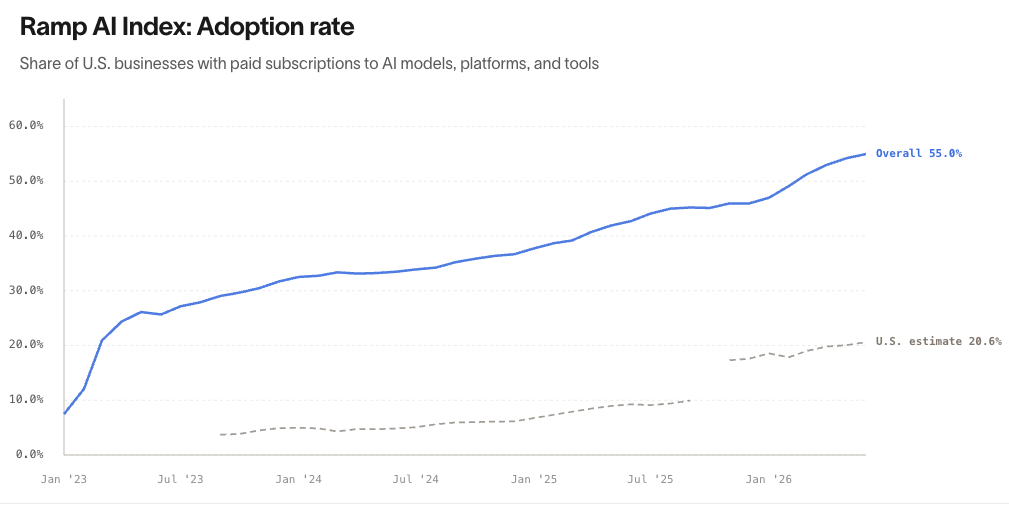
Figure 4: Ramp AI Index Adoption Rate, Source: Ramp
The extension developed in this memo is that storage remains required even in the closed state, although listed enterprise-storage vendors are not the headline beneficiaries. Training pipelines need checkpoint storage and high-throughput data paths. Inference services need retrieval caches and reliable data access. Every production deployment needs version control, audit logs, policy metadata and recoverable copies. Hyperscaler ownership shifts the location of the rent; it does not eliminate the underlying workload.
The Morgan Stanley memo also cites more than 60% of enterprises using open-weight models. This is an adoption-presence statistic, not a verified share of production workloads, tokens, spending or profit. It is therefore directional evidence rather than a storage-revenue forecast. The relevant test is whether open-weight deployments move beyond experimentation and create durable data-management and infrastructure budgets.
Lower cost per call can expand total infrastructure demand if it makes enough additional workloads economically viable. Examples include customer-support automation, coding assistance, document processing, cybersecurity telemetry and manufacturing edge inference. Each workflow creates data that must be stored, retrieved and governed. The elasticity test remains important: storage growth must exceed the efficiency gains from lower model cost for total storage spending to rise. The persistence of the data estate gives storage a more resilient demand profile than the model layer itself.
3. State-by-state storage implications
Closed state: storage is necessary, but the rent sits upstream
In the closed state, frontier intelligence remains a managed service. API vendors and hyperscalers retain pricing power for complex work, while training and inference capacity remain scarce. Storage is an enabler rather than the headline winner. Centralized clusters still need high-throughput data ingestion, checkpointing, retrieval caches for managed inference and cyber-resilient backups.
A large model training run can generate substantial checkpoint and intermediate data sets. These workloads require sustained write throughput, rapid recovery for resumption and long-term retention for audit and reproducibility. Hyperscalers satisfy much of this demand with custom object stores, network fabrics and proprietary orchestration, capturing the rent directly. Listed storage vendors participate indirectly through hyperscaler services, design wins and AI-system partnerships.
NetApp has first-party cloud services across AWS, Azure and Google Cloud, including Cloud Volumes ONTAP and related data services. Dell is positioning PowerScale and ObjectScale within AI infrastructure architectures with NVIDIA. The investor implication is to discount generic capacity revenue and focus on AI data-path attach, cloud distribution and partner-led consumption. NetApp is one of the clearest listed-vendor expressions of this indirect closed-state exposure [2, 3, 5].
Hybrid state: the strongest environment for listed enterprise storage
The hybrid state is the most attractive architecture for listed enterprise-storage vendors. Enterprises route tasks among closed, open, smaller, self-hosted and edge models. The scarce asset becomes the decision and data layer that owns policy, identity, observability, evaluation and workflow integration. Routing is an operating and cost control mechanism that determines when to use an expensive frontier model, a smaller model, a local model or a cached answer.
Hybrid deployments also multiply copies and policies. A customer record may exist in an on-premises database, a vector index for retrieval-augmented generation, an embedding store, a model-router cache and a governed backup. Each copy must respect identity, lineage, retention and recovery policies. Data mobility, including the ability to move, tier and replicate data across public cloud, private cloud, on-premises arrays and edge devices, becomes an explicit budget line.
The vendor that owns a model-neutral control plane and a consistent data fabric is positioned to capture this rent. NetApp combines ONTAP, first-party cloud implementations and AI Data Engine. HPE offers Data Fabric and GreenLake. Dell offers APEX and broader private-AI systems. Everpure combines its flash platform with Evergreen subscriptions and data-management capabilities. The hybrid state is where recurring revenue, service attach and operational switching costs can compound most visibly, but investors should verify that these services generate net-new spend rather than simply protect an installed base.
Open state: more retrieval, more localization, more price pressure
In the open state, model weights become a more available input. Inference is not free because memory, electricity, networking, data, software support and integration remain costly. However, a model creator cannot rely on a large scarcity rent unless it also owns distribution, a hosted service, a proprietary data loop or a trusted enterprise contract. Sovereign, local and edge inference become more common, and storage and retrieval become more visible line items in the enterprise budget.
Fine-tuning and retrieval-augmented generation increase local data-preparation intensity. An enterprise fine-tuning an open model on proprietary data must retain training and validation data, evaluation sets, adapter weights, model versions and audit records, often under air-gapped or sovereign conditions. Retrieval-augmented generation is a common enterprise pattern for grounding model outputs in internal knowledge. Ingesting, chunking, embedding, indexing and retrieving documents each creates a data-management workload. Agent architectures could increase query frequency and make persistent memory layers more important in production.
The counter-risk is faster commoditization of generic capacity. Open models can increase storage volume while reducing willingness to pay for undifferentiated terabytes. Vendors that pair flash hardware with data services, such as Everpure Purity and DirectFlash, NetApp ONTAP and AI Data Engine, Dell PowerScale and ObjectScale, and HPE Alletra and Data Fabric, are better positioned to defend margin than vendors whose value proposition is capacity alone. The investor test is to prefer flash efficiency, resilience and recurring data services, then stress-test gross margin and free cash flow under adverse flash-cost and pricing assumptions.
4. Profit-pool migration and vendor comparison
Demand is not the same as profit. Across the three states, storage volume can grow while the profit pool migrates. In the closed state, hyperscalers, custom infrastructure, memory and software capture more value than array vendors. In the hybrid state, control-plane software, data services, subscriptions and integration capture incremental rent. In the open state, volume may be highest while per-unit pricing is pressured. Durable profit therefore accrues to vendors that own data gravity, switching costs, service revenue and ecosystem ties.
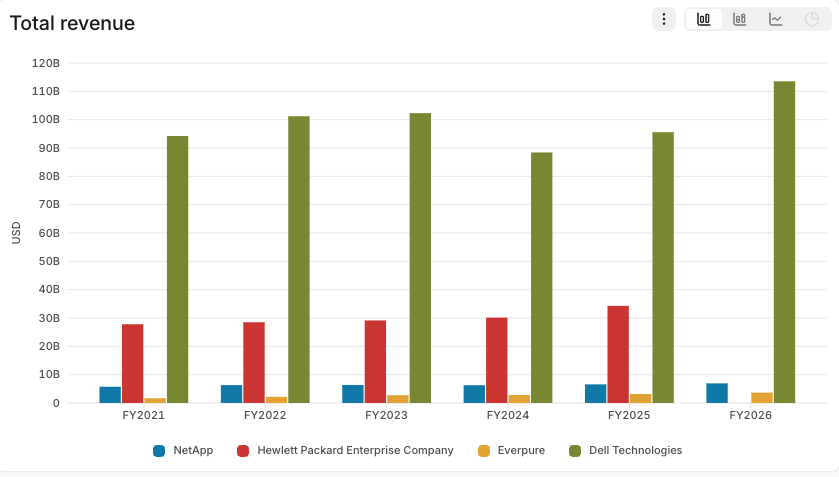
Figure 5: Revenue Trends, Source: Quartr
The strategic implication is that mix matters more than units. Investors should monitor recurring software and subscription revenue, AI and retrieval-service attach, gross-margin stability through flash-cost cycles, customer concentration and free cash flow conversion. The cross-state stock is the vendor with data gravity, management software, service revenue and an open ecosystem, not simply the vendor that ships the most terabytes.
|
Name |
Cross-state role |
Evidence and differentiators |
Key questioning point |
|---|---|---|---|
|
NetApp |
Lead data-platform exposure. Strong hybrid, relevant open, indirect closed. |
ONTAP, public cloud services across AWS, Azure and Google Cloud, and AI Data Engine. FY26 revenue $6.93B, up 5%; Q4 revenue $1.95B, up 12%; Q4 all-flash revenue $1.2B, up 18%; Q4 Public Cloud revenue $182M, up 11% [2, 3]. |
Does AI Data Engine attach to net-new AI spending, or mainly protect existing ONTAP capacity? Monitor cloud growth, service attach and gross margin. |
|
Everpure |
Higher-beta flash, performance and data-management exposure. Formerly Pure Storage. |
DirectFlash, Purity, Evergreen subscriptions and 1touch data intelligence. Q1 FY27 revenue $1.053B, up 35%; product revenue $577M, up 55%; subscription ARR $2.0B, up 19%; non-GAAP operating margin 15.1% [4]. |
Can recurring services and flash efficiency defend margin against customer concentration, flash-cost inflation and open-state price pressure? |
|
Dell |
Broadest systems exposure through servers, storage and private AI. |
PowerScale, ObjectScale, PowerProtect and AI infrastructure positioning with NVIDIA. Q1 FY27 storage revenue $4.3B, up 8%; AI-optimized server revenue $16.1B, up 757% [5]. |
Does storage attach to the AI server cycle, or is the equity story dominated by server demand, capex digestion and mix? |
|
HPE |
Hybrid and edge infrastructure with storage inside GreenLake. |
Alletra, Data Fabric and GreenLake. Q2 FY26 Cloud and AI revenue $7.707B, up 23%; storage revenue $1.175B, up 2% [6]. |
Can storage and data services accelerate within a broader networking and private-cloud portfolio despite integration and mix risk? |
NetApp is the cleanest model-agnostic data-platform expression. Everpure offers the most direct flash and retrieval beta, with greater concentration and pricing sensitivity. Dell is the broadest private-AI systems exposure, but storage is only one part of the equity story. HPE offers a hybrid and edge platform with the lowest storage purity of the four. These are different exposures to the same cross-state thesis and should not be valued as interchangeable storage pure plays.
5. NetApp: AI-driven demand and recurring-revenue visibility
NetApp and AI-driven enterprise demand. NetApp explicitly frames AI adoption as an enterprise-demand driver: AI initiatives depend on large, distributed, high-quality data that must be managed, secured and activated across on-premises, edge and cloud environments. The company argues that most enterprises still operate fragmented data estates across data centers and multiple clouds. That framing expands the relevance of ONTAP and related infrastructure and cloud services, but it remains management framing rather than a disclosed AI-revenue line [7, 8].
NetApp is trying to capture this demand through AI-ready infrastructure, the NetApp AI Data Engine, cyber-resilience features and partnerships including NVIDIA and Microsoft. Its Q4 prepared remarks described the primary enterprise AI bottleneck as activating unstructured data and highlighted zero-copy activation across hybrid and multicloud environments. This supports the memo's cross-state view: AI adoption increases the value of data governance, performance, security and mobility even when model architecture changes [7, 8].
Demand signals. Adjacent disclosed metrics fit the thesis. Public Cloud revenue increased from $611 million in FY2024 to $665 million in FY2025 and $688 million in FY2026. Hybrid Cloud all-flash revenue mix rose from 58% to 64% to 67% over the same period; NetApp attributes the mix increase to growing customer demand for all-flash storage solutions. These are not AI-specific revenue disclosures, so the correct investor read-through is demand validation for cloud-integrated and higher-performance infrastructure, not a standalone AI growth rate [7].
NetApp also reported more than 1,100 AI and data-preparation wins in FY2026, including about 500 in Q4. Win counts establish activity but not revenue, margin or conversion; the more investable KPI is whether those wins attach to Public Cloud, all-flash, Keystone and higher services gross margin [8].
Keystone and recurring revenue. Keystone is a subscription-based storage-as-a-service offering that delivers NetApp's portfolio across on-premises and cloud environments. Revenue from Keystone grew approximately 65% in FY2026 versus FY2025. NetApp's professional and other services revenue rose to $407 million from $355 million, with the increase primarily reflecting higher Keystone revenue. The product therefore supports recurring contribution inside the services line, even though NetApp does not separately disclose Keystone revenue as a standalone line [7, 8].
Visibility and margin read-through. Unbilled remaining performance obligations, which management describes as a key indicator of future Keystone revenue growth, reached $807 million at FY2026 year-end, up 88% year-over-year. Professional and other services gross margin improved to 31.0% from 26.5% in FY2025; Q4 professional services revenue grew 14% year-over-year, mainly driven by Keystone, and Q4 professional services gross margin improved 80 basis points sequentially to 32.1% [8].
Management also frames Keystone demand as part of a broader shift toward consumption-based IT and says a storage-as-a-service business should grow faster than the traditional business. The investor conclusion is positive but bounded: Keystone lifts recurring-revenue visibility through services growth and unbilled RPO, and it appears to aid margin mix, but the absence of standalone Keystone revenue or ARR means investors should not assign a precise recurring-revenue multiple to it without additional disclosure [8].
NetApp-specific read-through. AI adoption strengthens the demand case for NetApp's unified data infrastructure; Keystone strengthens the revenue-quality case. Together, they support a model-agnostic AI infrastructure harvester thesis, but the proof remains conversion into sustained Public Cloud growth, all-flash mix, services margin and free cash flow rather than headline AI activity alone.
6. Risks and falsification tests
The thesis is constructive but conditional. Each risk below has a monitorable signal that could reduce the basket or change its composition.
Hyperscaler insourcing. Custom white-box arrays, object stores and AI data engines could bypass listed vendors. Falsification test: first-party cloud-storage growth decelerates materially for two consecutive quarters while hyperscaler AI revenue continues to grow.
Flash-cost inflation. AI demand can raise NAND costs while customers resist price pass-through. Falsification test: gross margin compresses by more than 200 basis points while flash costs rise and free cash flow conversion weakens.
Open-state commoditization. Open models can increase storage demand while reducing willingness to pay for generic capacity. Falsification test: recurring data-service mix fails to increase as product revenue grows.
Cannibalization versus net-new spend. AI-ready arrays may replace legacy systems rather than expand total storage budgets. Falsification test: storage growth remains in line with or below server and overall IT spending for multiple quarters.
Regulatory and sovereignty fragmentation. Rules may slow open deployment, but they can also increase demand for lineage, auditability, recovery and trusted data services. Falsification test: regulation makes open deployment uneconomic without creating offsetting data-management attach.
Interpretation. A weak storage number is not automatically a thesis failure. The key distinction is whether storage is losing AI wallet share or whether revenue is temporarily delayed by a server, flash or procurement cycle.
7. Conclusion and monitoring framework
Enterprise storage is a cross-state beneficiary because the data estate persists even when the model layer changes. The closed state keeps storage necessary but shifts more rent to hyperscalers and custom infrastructure. The hybrid state is the most favorable for listed vendors because data mobility, governance, routing and recovery become explicit control-plane requirements. The open state increases local retrieval and data preparation while introducing stronger price pressure on generic capacity.
The preferred exposures are therefore vendors with a credible path from hardware to data services. NetApp offers the strongest model-agnostic and cross-cloud expression. Everpure offers the highest direct flash and retrieval beta, with greater sensitivity to concentration and pricing. Dell provides broad private-AI systems exposure, while HPE offers a broader hybrid and edge portfolio with lower storage purity. The thesis should be increased only when AI-related storage demand is accompanied by service attach, stable gross margins and durable free cash flow conversion.
NetApp-specific evidence. Public Cloud revenue rose from $611 million in FY2024 to $688 million in FY2026, all-flash mix rose from 58% to 67%, Keystone revenue grew approximately 65% and unbilled RPO reached $807 million, up 88% year-over-year. These indicators strengthen the demand and revenue-quality case, but Keystone's standalone revenue and ARR remain undisclosed, so the recurring-revenue conclusion should remain directional rather than a precise mix estimate [7, 8].
The practical monitoring set is: first-party cloud-storage growth; AI and retrieval-service attach; recurring revenue and subscription ARR; gross margin after flash-cost changes; free cash flow conversion; customer concentration; and evidence that AI storage is net-new rather than a replacement for legacy capacity. These indicators are more useful than headline model releases because they test whether the AI data estate is creating durable public-equity earnings exposure.
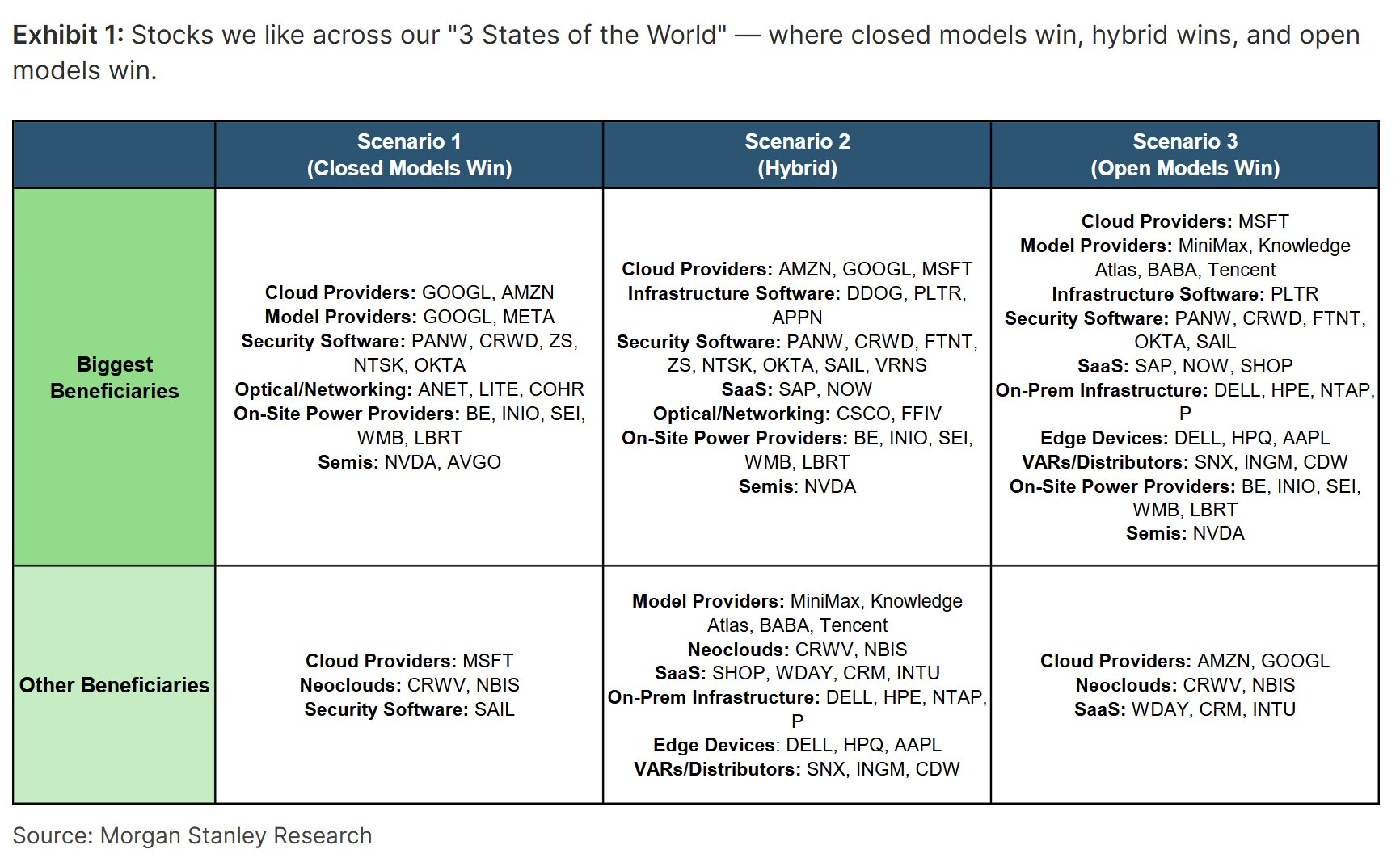
Exhibit 1. Morgan Stanley Research, “Weighing In: Open-Weights Models & 3 States of the World,” 3 August 2026.
X = biggestalleyoop